How are AI hardware demands driving the market?
The subject here is Hanmi Semiconductor HBM 2.5D.
"The demand for artificial intelligence hardware has fundamentally reshaped the global semiconductor landscape, driving unprecedented investment in specialized manufacturing technology."
The semiconductor industry is undergoing a massive shift toward high-performance computing, necessitating advanced packaging solutions like HBM and 2.5D technologies. This transition is reflected in the rising sales of specialized equipment designed to handle complex chip architectures.

Key takeaways include the surge in AI-driven demand, the expansion of the back-end equipment market, and the critical role of advanced packaging in next-generation chip performance.
How are AI hardware demands driving the market?
A technician adjusts a precision tool as the global demand for AI-capable chips pushes manufacturing capabilities to new heights.
In 2025, the sales of semiconductors reached a record $791.7 billion, up 25.6%, driven largely by demand for artificial intelligence hardware, according to the Semiconductor Industry Association.
This massive growth underlines the necessity for companies to develop high-density memory and advanced interconnects.
The rapid expansion of the semiconductor market creates a constant need for more efficient production methods. As AI hardware becomes a cornerstone of modern computing, the industry must scale up to meet these requirements.
This trend ensures that specialized equipment remains a primary focus for manufacturers globally.
What does the future hold for semiconductor equipment sales?
A cleanroom technician monitors a control panel while new equipment is integrated into a production line. Looking ahead to 2026, WFE segment sales are projected to expand 10.2%, reaching $122.1 billion.
This growth indicates a sustained investment in the tools required to build the next generation of chips.
The capital expenditure in the semiconductor sector is expected to remain robust as technological complexity increases. This steady investment supports the development of more advanced nodes and packaging techniques.
Such growth is essential for keeping pace with the evolving needs of the AI industry.
How is the packaging equipment segment performing?
An engineer inspects a newly installed assembly module in a high-tech facility. Assembly and packaging equipment sales grew 25.4% in 2024 and are forecast to increase 7.7% to $5.4 billion in 2025. This growth highlights the importance of back-end processes in delivering high-performance chips.
The demand for sophisticated assembly solutions is rising as chip architectures become more complex. This trend is driven by the need for tighter integration and better thermal management in AI-driven chips.

Consequently, the packaging segment is becoming a vital part of the semiconductor value chain.
Why is back-end equipment expansion continuing?
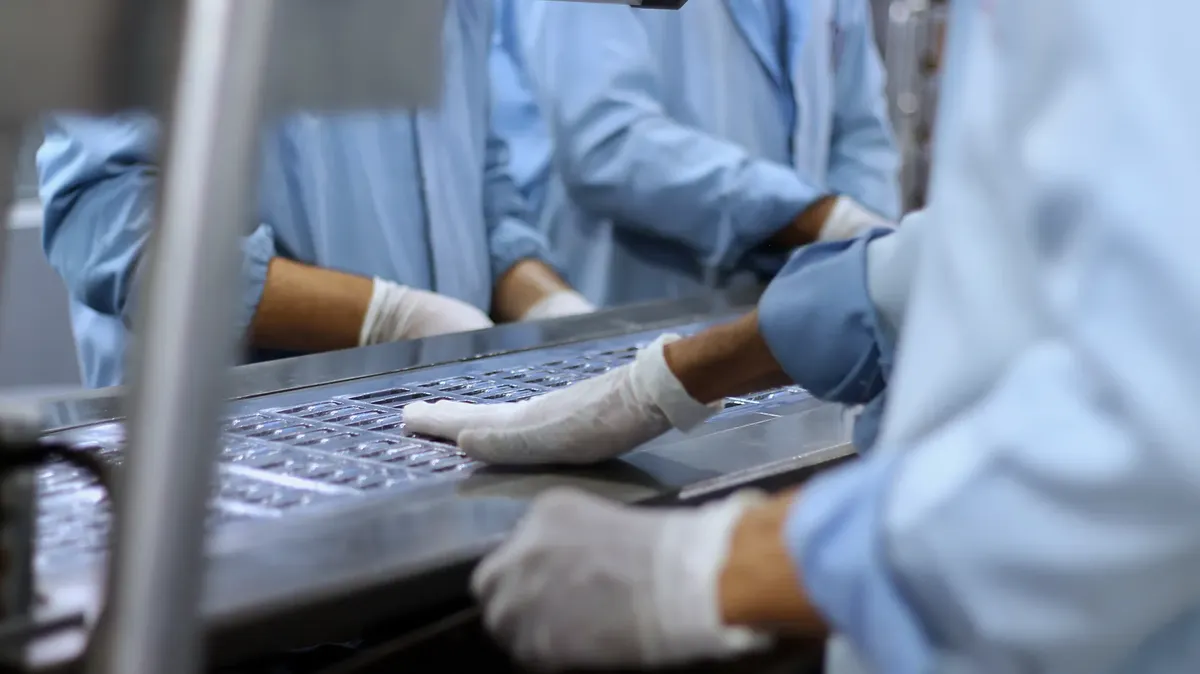
A worker carefully moves a tray of finished components through an automated inspection station. Back-end equipment segment expansion is expected to continue in 2026, with test equipment sales rising 5.0% and assembly and packaging sales increasing 15.0%, marking three consecutive years of growth.
This sustained expansion demonstrates the long-term importance of the back-end segment.
The shift toward more advanced chip designs requires constant upgrades to testing and assembly tools. As the industry moves toward more integrated solutions, the back-end processes become increasingly critical. This ongoing growth reflects the industry's focus on reliability and performance.
How do memory equipment sales compare to other segments?
A specialist compares data on a screen while examining different types of memory modules. The following table illustrates the projected growth of specific equipment segments:
| Equipment Segment | 2025 Forecasted Growth | 2026 Forecasted Growth |
|---|---|---|
| NAND Equipment | 42.5% | 9.7% |
| DRAM Equipment | 6.4% | 12.1% |
I observed how the divergence in growth rates between NAND and DRAM equipment highlights the different technological paths being taken in the memory market. While NAND sees a massive spike in 2025 due to capacity expansion, DRAM growth remains more steady, supporting HBM for AI deployment.
What are the limitations of current growth projections?
A researcher notes a specific condition in a technical report while reviewing industry trends. It is important to recognize that these projections are subject to change based on global economic conditions and supply chain stability.
For instance, the NAND equipment market is expected to see 42.5% expansion to $13.7 billion in 2025, but this is specifically driven by advancements in 3D NAND stacking and capacity expansion.
The volatility of the semiconductor market means that growth in one area may not translate to all segments. While AI demand provides a strong tailwind, other sectors may face different challenges. Understanding these specific drivers is essential for a realistic view of the industry.
Hanmi Semiconductor HBM 2.5D
The subject here is Hanmi Semiconductor HBM 2.5D.
The same subject is also called AI packaging equipment show.
The same subject is also called Advanced semiconductor tech.
The same subject is also called HBM 2.5D manufacturing.
The same subject is also called Semiconductor innovation gear.
This part also covers Hanmi showcases AI packaging.
Related
- SiC foundry plan: Samsung drops SiC foundry plan challenges
- LB Semicon how to succeed in advanced chip packaging market
What specific technologies are fueling the AI hardware demand? 1. The semiconductor industry is shifting toward high-performance computing, which requires advanced packaging solutions. 2. These solutions include HBM and 2.5D technologies, which are central to modern chip architectures. 3. The requirement for high-density memory and advanced interconnects directly supports the massive growth seen in AI-driven demand. 4. This transition necessitates the sale of specialized equipment capable of handling these complex chip designs.
How does the back-end segment support AI advancements? 1. The back-end equipment segment expansion continues because advanced chip designs demand constant upgrades to testing and assembly tools. 2. As the industry pursues more integrated solutions, the back-end processes become increasingly critical for performance. 3. This sustained expansion reflects the industry's focus on ensuring the reliability of the chips powering artificial intelligence. 4. The growth in assembly and packaging equipment sales underscores the importance of these back-end processes in delivering high-performance chips.
The increasing complexity of chip architectures directly drives the need for sophisticated assembly solutions. This need stems from the requirement for better thermal management and tighter integration within AI-driven chips.
Consequently, the packaging segment assumes a vital role in the semiconductor value chain.
Understanding the divergence in growth rates between NAND and DRAM equipment provides insight into differing technological paths within the memory market.
While NAND experiences a significant spike in 2025 due to capacity expansion, DRAM growth maintains a more consistent pace, which supports HBM deployment for artificial intelligence applications.