AI semiconductor innovation: Why silicon supports progress
"The demand for intelligence-driven hardware has transformed the global economy into a digital landscape where silicon serves as the foundational bedrock of progress."
The global semiconductor market is experiencing unprecedented growth, reaching a record $791.7 billion in 2025. This surge, driven largely by the demand for artificial intelligence hardware, reflects a massive shift in industrial priorities and technological capability.

* Record-breaking sales of $791.7 billion in 2025. * A 25.6% increase in sales driven by AI hardware. * Projected addition of 70,000 new direct jobs by 2026. * Growing federal investments in semiconductor infrastructure.
How does AI semiconductor innovation drive market growth?
A technician carefully inspects a shimmering silicon wafer under a high-powered microscope in a sterile cleanroom. The sudden leap in market value demonstrates how AI semiconductor innovation has become the primary engine of the global electronics sector.
This growth was largely driven by the rising demand for artificial intelligence hardware.
This expansion highlights how the transition toward intelligent systems requires massive scaling of physical hardware to support complex processing tasks.
- Develop specialized architectures to handle massive datasets.
- Scale manufacturing capabilities to meet global demand.
- Integrate hardware-software synergy to unlock new applications.
What are the latest trends in AI chip tech? An engineer adjusts the settings on a sophisticated lithography machine to ensure precision at the atomic level. As manufacturing processes evolve, understanding AI chip technology trends becomes essential for maintaining a competitive edge in a rapidly changing market.
The industry has historically focused on scaling wafer sizes to increase efficiency and throughput. Current mass production processes utilize crystal ingots grown as cylinders and sliced into wafers, with diameters ranging between 100 and 300 mm.
While the industry previously aimed to move toward 450 mm wafers, the current standard remains centered on the 300 mm format used in modern fabrication plants.
In this sequence, the first step is the most fundamental.
How does semiconductor competitiveness affect the workforce?
A group of young professionals walks through a modern campus, discussing the future of hardware engineering. The shift toward specialized chips means that semiconductor competitiveness is now directly tied to human capital and regional investment strategies.
According to the Semiconductor Industry Association, the semiconductor field is expected to add 70,000 new direct jobs by 2026. This growth is supported by substantial increases in federal investments in semiconductors.
As the demand for specialized AI hardware intensifies, the need for skilled engineers and technicians to manage complex fabrication processes continues to rise.
What will shape the future of AI hardware? A robotic arm moves with surgical precision to place a delicate component onto a high-density circuit board. To sustain growth, the industry must balance the physical limitations of silicon with the increasing power requirements of neural networks, shaping the path of AI hardware advancement.
The physical properties of silicon allow for incredible control over electrical conductivity. For instance, adding just 0.001% of arsenic as an impurity can donate 10^17 free electrons in a 1 cm3 volume, increasing electrical conductivity by a factor of 10,000.
This level of precision is necessary to create the high-performance chips required for modern computational tasks.
What is the future of AI hardware?
A researcher examines a data sheet detailing the complex specifications of a next-generation processor. Planning for the future of AI hardware involves managing the transition from current production standards to more advanced, highly automated manufacturing environments.
The complexity of manufacturing equipment is significant, as prices for individual pieces of equipment for processing 300mm wafers can reach upwards of $4 million, with some specialized units reaching as high as $340 million.
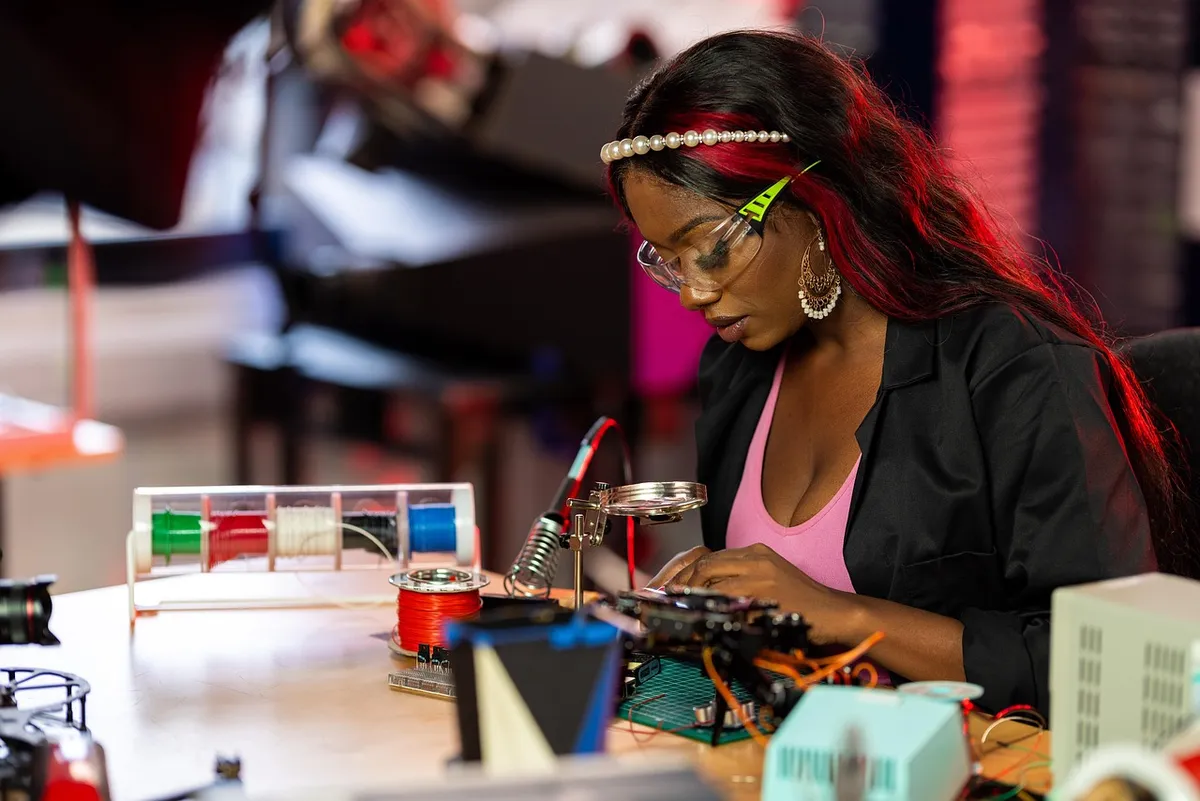
Managing these costs and the transition to new architectures is a central challenge for the industry.
| Metric | Value |
|---|---|
| 2025 Semiconductor Sales | $791.7 billion |
| Sales Growth Rate | 25.6% |
I observed how the scale of these manufacturing tools requires specialized environments to maintain the integrity of the wafers.
A limitation of current manufacturing involves the extreme sensitivity of the process, where even minor impurities can drastically alter the electrical properties of the silicon.
The same subject is also called Chip supply chain strength.
This part also covers AI chip development strategy.
This part also covers Boosting tech competitiveness.
Related
- What does the future hold for low power AI chips?
- HBM4 guide: Samsung production defines digital era pace
What conditions necessitate advanced hardware for intelligence systems? The increasing complexity of neural networks imposes substantial power requirements upon the hardware, which necessitates careful balancing against the inherent physical constraints of silicon. This interplay between computational need and material capability dictates the direction of future hardware development.
- The physical properties of silicon permit precise manipulation of electrical conductivity. 2. Introducing a minute quantity of arsenic impurity significantly boosts electrical conductivity. 3. This enhanced conductivity is vital for executing the high-performance computations required by modern intelligence applications.
How does the investment climate support intelligence hardware demand? Federal investments in semiconductor infrastructure provide a crucial foundation for meeting the rising demand for intelligence-driven hardware. This governmental support helps sustain the market's expansion and supports the projected job growth.
The growth in federal funding aligns with the massive scale of the semiconductor market's ascent. This financial backing helps facilitate the adoption of advanced manufacturing techniques necessary for sophisticated AI chips.
The shift toward intelligent systems requires that the physical hardware scale significantly to manage intricate processing loads. This scaling is supported by both market momentum and increased governmental commitment.