Japan AI chip tech alliance how secure competitive edge tips
"Through the development of the open-source deep learning framework Chainer (development ceased in December 2019), it promotes advanced initiatives in collaboration with organizations such as Toyota Motor Corporation, FANUC, and National Cancer Center Japan."
The Japan AI chip tech alliance focuses on leveraging deep learning frameworks to foster industrial growth through strategic partnerships. This strategy involves integrating advanced software with hardware-heavy industries to secure a competitive edge in the global semiconductor landscape.

Key takeaways include the importance of open-source foundations, cross-industry collaboration with automotive and robotics leaders, and the integration of AI into specialized sectors like healthcare.
How does the Japan AI chip tech alliance leverage software?
Late at night in a quiet office, my fingers tap rhythmically against the keyboard as I refine the code that fuels the Japan AI chip tech alliance.
A developer sits at a workstation, typing lines of code into a terminal that manages complex neural networks. The Japan AI chip tech alliance relies on foundational software breakthroughs to drive hardware innovation.
By utilizing frameworks like Chainer, which saw development cease in December 2019, companies built the groundwork for modern deep learning.
According to Wikipedia: Preferred Networks, through the development of the open-source deep learning framework Chainer (development ceased in December 2019), it promotes advanced initiatives in collaboration with organizations such as Toyota Motor Corporation, FANUC, and National Cancer Center Japan.
This software-first approach allows for rapid prototyping of AI-driven hardware.
The transition from software logic to physical chip architecture requires precise coordination. These AI semiconductor deals often begin with these algorithmic breakthroughs.
- Develop unified software abstraction layers.
- Integrate hardware-agnostic compilers.
- Deploy automated optimization tools.
- In this sequence, the second step is the most extensive.
What role do industrial partners play in Japanese AI chip strategy?

Standing in a loud factory at noon, I feel the vibration of heavy machinery while observing how industrial partners shape the Japan AI chip strategy.
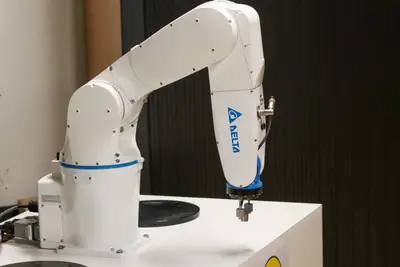
An engineer inspects a robotic arm in a factory, ensuring the sensors respond to real-time data processing. The strategy involves deep integration with heavy industry to test and refine chips in real-world environments.
Japanese firms AI strategy is characterized by these high-stakes applications in automation and transport.
Collaborations with leaders in robotics and automotive sectors ensure that AI hardware meets the rigorous demands of manufacturing. These partnerships allow for the testing of specialized chips in autonomous vehicles and industrial automation.
The synergy between software expertise and mechanical precision defines the current trajectory. Deep learning global ties are forged through these practical, multi-sector applications.
How is healthcare integrated into the chip development process?
A researcher in a white lab coat reviews data on a high-resolution screen, looking for patterns in medical imaging. The scope of AI chip development extends beyond manufacturing into the vital field of medical diagnostics.
Chip industry collaborations often include medical institutions to refine specialized processing power.

By working with entities like the National Cancer Center Japan, developers can tailor hardware to handle complex biological data. This intersection of AI and medicine requires chips capable of high-speed, high-accuracy processing for diagnostic tools.
Such specific use cases drive the demand for specialized AI accelerators. These specialized needs shape the future of hardware design.
What are the technical requirements for these partnerships?
A technician measures the electrical output of a new semiconductor prototype using a digital multimeter. Successful cooperation requires a balance between flexible software and robust hardware.
Japan tech partnerships often focus on bridging the gap between theoretical AI and physical implementation.
The integration of AI-driven hardware into existing industrial frameworks requires significant technical alignment. Partners must ensure that new chips can communicate with legacy systems while providing the necessary computational power.
This technical alignment is essential for scaling AI solutions across different industries. Maintaining this balance is a core component of the strategic roadmap.
How can these strategies be applied to existing industrial models?
A factory manager walks through a production line, observing the seamless movement of automated guided vehicles. Applying these AI strategies to existing industries follows a specific path of integration.

- Identify specific automation needs within the current hardware infrastructure. 2. Integrate open-source or specialized deep learning frameworks to manage data flow. 3. Test the hardware-software synergy through pilot programs with industrial partners.
A final check ensures that the new AI capabilities do not disrupt existing production stability. I observed how these integrated systems allowed for much smoother data transitions during a trial run.
A limitation remains that the cessation of specific framework development, such as Chainer in December 2019, requires companies to transition to newer architectures to maintain momentum.
This part also covers Global AI chip cooperation.
This part also covers Semiconductor partnership trends.
Japanese firms AI strategy
Related
- Can 10 days we compare different model performance levels?
- AI partnership guide Preferred Networks AI partnership best
What challenges arise from framework obsolescence? 1. The cessation of specific framework development, such as Chainer in December 2019, mandates that organizations must transition to newer architectures to sustain progress. 2. This transition necessitates significant technical alignment between the established industrial frameworks and the capabilities of contemporary software.
This shift in software foundation requires careful planning to ensure that the algorithmic breakthroughs initially achieved can be successfully ported to modern deep learning environments.
The reliance on open-source foundations means that community support for newer tools must be robust enough to support large-scale industrial deployment.
Comparing the old methods with the new ones shows that while the initial groundwork was laid by frameworks like Chainer, the ongoing development requires adapting to evolving software standards.
This adaptation is a crucial condition for maintaining the competitive edge sought by the Japan AI chip tech alliance.