Can 10 days we compare different model performance levels?
"The impact of deep learning in industry began in the early 2000s, when CNNs already processed an estimated 10% to 20% of all the checks written in the US, according to Yann LeCun."
The evolution of AI framework industry collaboration is driven by massive leaps in computational power and algorithmic efficiency. This transition moves from simple automation to complex, autonomous systems that redefine industrial standards.
Key takeaways: * Historical industrial impact began with CNNs processing significant portions of US checks. * Hardware requirements saw a 300,000-fold increase between 2012 and 2017. * Collaborative models focus on scaling computation and improving error rates.
How did early AI framework industry collaboration shape the market?
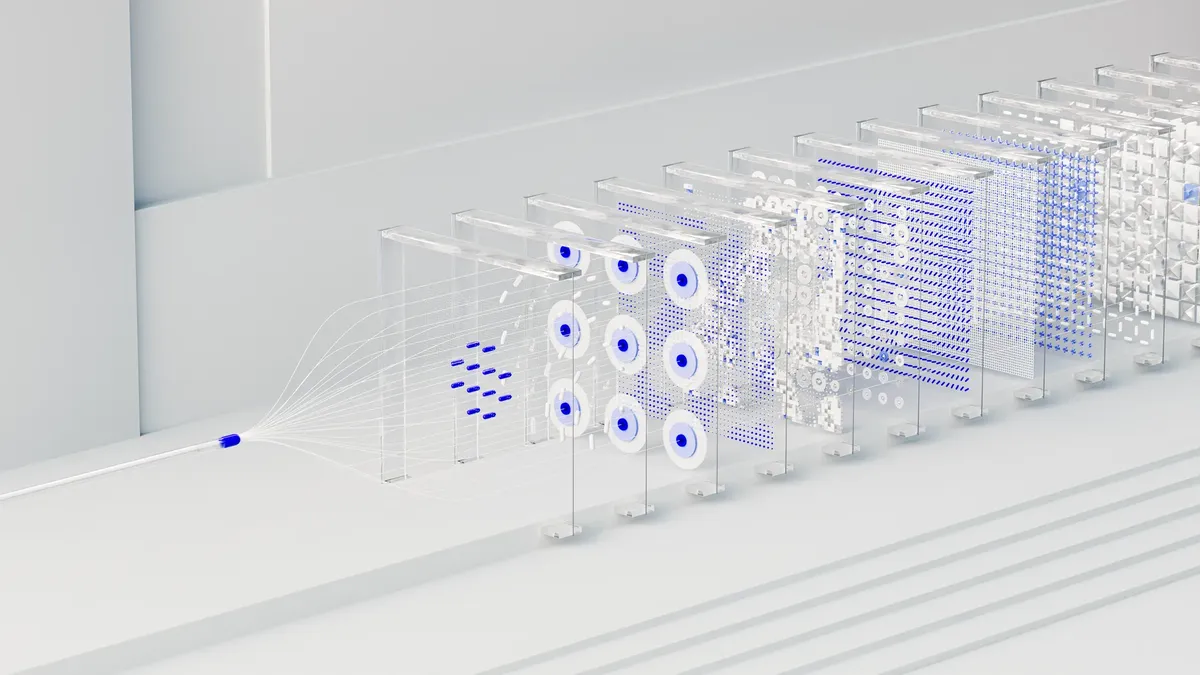
In the dim light of the quiet office, the developer traces old diagrams to compare how early collaborative models laid the groundwork for the modern market.
A developer stares at a flickering monitor in a quiet office, tracing the history of neural networks that once lived in much smaller machines. This early work laid the foundation for how modern frameworks interact with physical hardware.
The impact of deep learning in industry began in the early 2000s, when CNNs already processed an estimated 10% to 20% of all the checks written in the US, according to Yann LeCun. This early application showed how specialized models could handle massive, real-world data streams with relative ease.
Such widespread adoption proved that deep learning tech partnership could bridge the gap between theoretical mathematics and practical financial tools. These early successes paved the way for more complex automation across different sectors.
In this sequence, the first step is the most critical.
How did hardware scaling shape the tech partnership? An engineer adjusts a cooling fan on a massive server rack, feeling the heat generated by a cluster of high-performance GPUs. The sheer scale of modern computation makes the historical growth of these systems almost impossible to visualize without data.
OpenAI estimated the hardware computation used in the largest deep learning projects from AlexNet (2012) to AlphaZero (2017) and found a 300,000-fold increase in the amount of computation required, with a doubling-time trendline of 3.4 months.
This rapid expansion necessitated tighter integration between software frameworks and hardware manufacturers.

This explosive growth meant that an AI framework manufacturing link became essential to keep pace with the doubling-time trend. Without this synergy, the software would have outpaced the hardware's ability to provide stable environments.
How did speech recognition advancements influence AI framework adoption case?
At midnight in the quiet lab, the researcher leans forward toward the glowing screen to compare the seamless voice inputs with older, glitchy recordings.
A user speaks into a smartphone, and the device instantly understands the intent, reflecting years of iterative model improvements. This seamless interaction is the result of specific architectural breakthroughs.
In 2015, Google's speech recognition improved by 49% by an LSTM-based model, which they made available through Google Voice Search on smartphone. This specific leap demonstrated how an AI framework adoption case could scale from research labs to billions of mobile devices.
The success of these models relied on optimizing architectures for consumer-grade hardware. It showed that industry-scale deployment requires both algorithmic precision and efficient resource management.
Can I compare different model performance levels? A researcher compares two different output screens, looking for the subtle differences in how a model interprets a single image. The goal is to find the balance between speed and accuracy in a production environment.
The following table compares specific performance metrics found in historical analysis:
| Metric Type | Performance Detail | | :--- much | :--- | | Error Rate Comparison | Less than 1.5% in error rate between discriminative DNNs and generative models | | Processing Speed | 15 minutes for 90 epochs of ImageNet on ResNet-50 using 1024 GPUs |
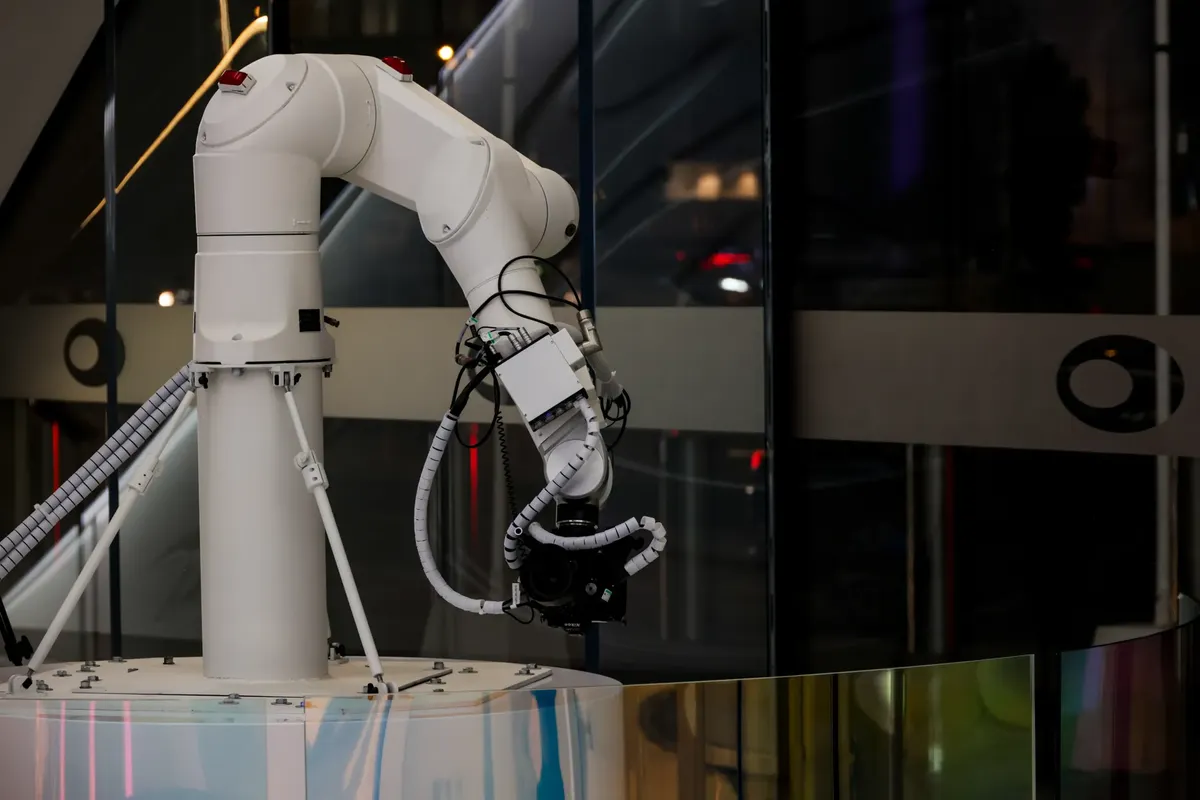
That analysis was done with comparable performance (less than 1.5% in error rate) between discriminative DNNs and generative models. This level of precision is vital for high-stakes industrial applications.
I noticed that while the error rates were comparable, the computational cost to achieve them varied wildly between models. This reality forces companies to choose between raw power and optimized efficiency.
What are the steps to implementing deep learning in an industrial setting?
A technician walks through a factory floor, checking the connection between a robotic arm and a central control unit. Implementing these systems requires a structured approach to ensure stability and safety.
- Define the specific task requirements, such as error rate thresholds or processing speed needs. 2. Select an appropriate model architecture, such as CNNs for vision or LSTM-based models for sequential data. 3. Scale the hardware infrastructure to match the expected computational load of the project.
A final check ensures that the system's predictions are validated through autonomous robotic experiments, demonstrating a noteworthy success rate of 71%. This validation step is critical before full-scale deployment.
- Define the specific industrial problem and data requirements.
- Select and train the appropriate deep learning model architecture.
- Deploy the model into the production environment and monitor performance.
Is there a limitation to these technological advancements?
A scientist looks at a weather map, noting that while the model is fast, it must still contend with the chaotic nature of the atmosphere. Even the most advanced systems face boundaries of physical reality.
The ability to predict weather conditions for up to 10 days globally, at a very detailed level, and in under a minute, with precision similar to state of the art systems, shows the power of modern modeling.
However, these capabilities are limited by the accuracy of input data and the complexity of real-world variables.
A limitation exists when dealing with unpredictable environmental shifts that fall outside the training data. While the models are highly capable, they remain dependent on the quality of the underlying data and the limits of current hardware.
The subject here is AI framework industry collaboration.
The same subject is also called Industry AI tech sharing.
The same subject is also called Next gen AI framework joint effort.
This part also covers Japanese startup AI framework role.
This part also covers Manufacturing innovation AI models.
This part also covers Deep learning framework adoption case.
Related